
Should You Give Up a 3% Mortgage Rate? What One Phoenix Homeowner Decided
There's a sentence I hear almost every week … "We'd love to move, but we're never giving up our 3% rate."
It's the most common reason Phoenix homeowners stay put right now, and it isn't irrational. That rate was a genuinely rare moment in time. Walking away from it feels like leaving money on the table.
But a few months ago, my client Matt walked away from his. And Matt is not someone who makes decisions on feel … he works in finance. Numbers are his job. So I asked him, on camera, to explain the reasoning.
His answer reframed the question in a way I think a lot of homeowners need to hear.
"We were sitting on a large amount of money when we DID make the sale... why wait? The numbers made sense."
Why a 3% rate feels untouchable
Economists call it the lock-in effect. Millions of homeowners refinanced or purchased during a historically low-rate window, and now the cost of moving isn't just closing costs and a truck … it's the difference between the loan they have and the loan they'd take on.
That difference is real money, and it's the number everyone fixates on, because it's the easiest one to see. It shows up every month, on a statement, in the same place.
But here's the thing worth sitting with: your interest rate is a term of your loan. It is not the value of your position. Those are two different numbers, and only one of them is doing the heavy lifting in your net worth.
The question I asked Matt
Not "do you regret it?" … anyone can answer that with a shrug. What I wanted to know was how a person who does financial analysis for a living talked himself into giving up the best rate he'll probably ever have.
His reasoning came down to three things.
1. The equity was the bigger number
Matt and his wife had been in their home long enough to build a substantial equity position … the combination of appreciation and years of paying down principal. That equity was sitting still. It was real, it was theirs, and it was doing nothing except existing on a Zillow estimate. The low rate protecting it was, functionally, the reason they weren't using it. Once he set the two numbers side by side … the monthly cost of a higher rate against the size of the equity he could deploy … the rate stopped looking like the main event. It looked like a line item.
2. The risk only ran one direction
This is the piece I thought was sharpest, and it's the kind of thing you'd expect from someone who thinks in terms of exposure.
The rate you sign today is a ceiling, not a floor. If rates rise, you're protected … you're locked in at what you agreed to. If rates fall, you have the option to refinance into something better.
Matt's read was that the downside was capped and the upside stayed open. He wasn't predicting where rates go. He was recognizing that he didn't need to be right about it.
One honest caveat, because it matters: refinancing isn't free and it isn't guaranteed. It costs money to execute, it depends on rates actually falling, and it depends on you still qualifying when they do. "I'll just refinance later" is a plan, not a certainty. But the asymmetry Matt described is real, and it's a legitimate part of the calculation.
3. He was betting on his own trajectory
The third piece was the simplest. Matt expects to earn more over the next decade than he does today.
A payment that feels like a stretch against this year's income tends to feel different against year five's. Homeowners routinely underweight this, in part because it feels presumptuous to plan around a raise you haven't gotten. But if you're mid-career with a clear runway, your future income is a genuine input, not wishful thinking.
Put together: a large equity position doing nothing, a rate risk that ran one direction, and an income line that pointed up. Against that, the 3% stopped being the decisive factor.
What this doesn't mean
I'm not going to tell you everyone should sell. Matt's math worked because of Matt's specifics, and I'd have told him to stay put if the numbers had come out differently.
Keeping your low rate is very likely the right call when:
- You haven't built meaningful equity yet
- The new payment would genuinely strain your monthly budget
- Your home still fits your life … it's not too small, too far, or too much
- You might move again within a couple of years, since transaction costs need time to absorb
- Your income is flat or uncertain
The rate isn't a bad thing to protect. It's just not the only thing on the table.
How to actually run this math on your own home
If you're weighing this, these are the questions that matter more than the rate comparison:
What is your actual equity position today? Not the Zestimate … a real number, after what it costs to sell.
What would that equity buy you? In this market, in the areas you'd actually want to live. This is where most of the surprise lives, in both directions.
Does the new payment work against your real budget? Not a stretch you'd white-knuckle, but a number you'd be fine with in a slow year.
How long will you hold the next home? The longer the horizon, the more the rate matters less and the asset matters more.
Is your current home actually failing you? If it fits, the math almost never justifies moving. If it doesn't … if you're working around it every day … that cost is real even though it never shows up on a statement.
What does the next home do that this one can't? Space, location, land, or the potential to become something better than it is today.
The part most people miss … it's about the asset, not the rate
Here's where my perspective differs a little from most agents you'd talk to.
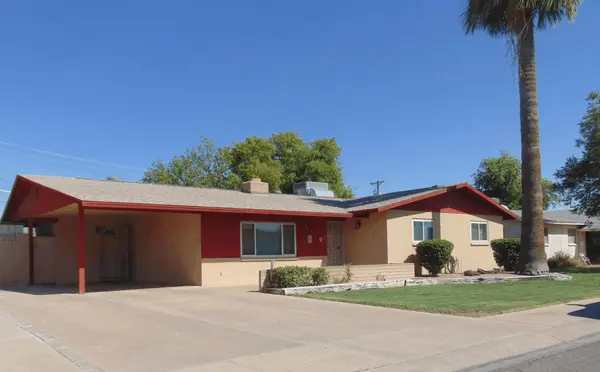
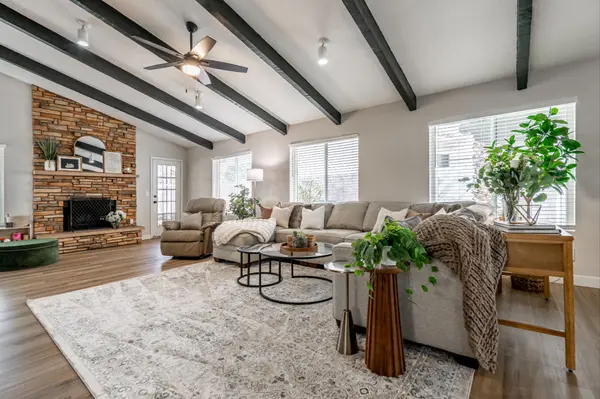
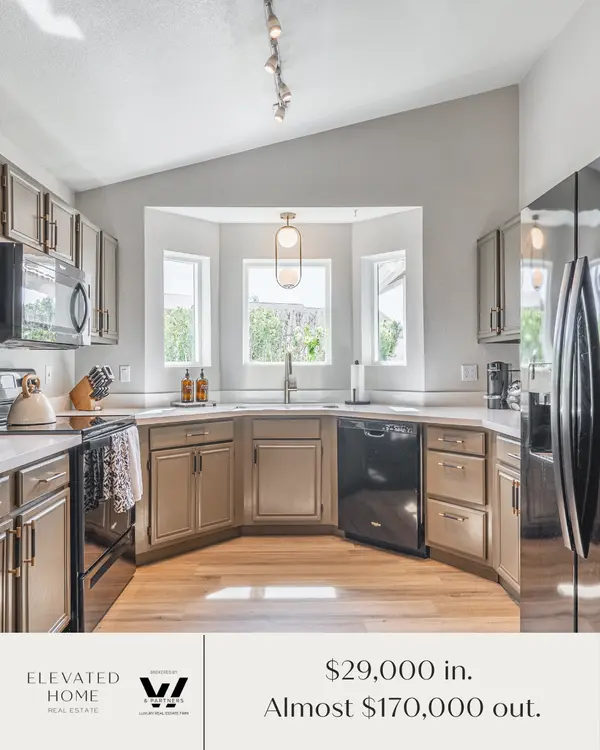
I also lead design and construction projects. So when I walk a property with a client, I'm not only asking what it's worth today … I'm asking what it could be worth, what the work would actually cost, and whether the bones justify the investment. That changes which homes are worth considering. A house that shows poorly but sits on the right lot, in the right pocket, with a layout that opens up beautifully, is often a far stronger long-term asset than the polished one down the street. Most buyers can't see that difference, so they don't pay for it.
If you're going to give up a rate you love, the home you move into needs to be worth it. That decision deserves more than a market analysis.
If you're sitting on a low rate right now
You don't have to move. But you should know your numbers, because "we have a 3% rate" is a reason to stay that most people have never actually tested.
I'm happy to walk you through yours … what your equity looks like today, what it would realistically buy across Phoenix, Arcadia, the Biltmore corridor, or Scottsdale, and what the next home would need to be for the move to make sense. No pressure and no obligation. Sometimes the answer is stay put, and I'll tell you that.
Reach out and we'll take a look.
Anna van Ham … Broker Associate Elevated Home Real Estate | Brokered by W & Partners Elevated Home Design Build 949.813.9144 · anna@elevatedhome.realestate [website] · [@IG handle]
I'm a licensed real estate broker associate, not a lender, tax professional, or financial advisor. Everything above is general information based on one client's experience, not advice for your situation. Please talk to your lender and your tax professional before making a decision.
Categories
- All Blogs (36)
- 3% Down Student Purchase (2)
- Acadia Lite (1)
- Architecture & Design (2)
- Arizona Real Estate Agent (6)
- ASU student housing (1)
- Before & After (2)
- Biltmore / Arcadia (1)
- Building Wealth (2)
- Buying Strategy (6)
- Buying vs. Renting (4)
- Case Studies (2)
- Central Phoenix (2)
- Central Phoenix Neighborhoods (3)
- Client Stories (3)
- client testimonials (2)
- Client Transformations (1)
- Coming Soon (1)
- Creative Financing, (2)
- Desert Ridge Real Estate (1)
- Elevated Living (1)
- Encanto Palmcroft (1)
- Encanto Palmcroft Phoenix (1)
- First Time Home Buyer (8)
- GCU Phoenix Housing (1)
- GCU student housing (2)
- Historic Home Expert (1)
- Historic Homes (2)
- historic Phoenix homes (2)
- Home Buying in Phoenix (7)
- Home Preperation (2)
- home remodeling Phoenix (1)
- Home Renovation (2)
- Home Renovation in Phoenix (2)
- How we get deals done (4)
- interior renovation (1)
- Investment Properties (3)
- Just Closed (3)
- Just Sold (1)
- kitchen renovation (1)
- Leasing & Tenant Placement (1)
- Lifestyle + Transition (1)
- Listing Preperation (2)
- market update (2)
- NAU Phoenix housing (1)
- negotiation (2)
- Neighborhood Guides (1)
- New Listing (6)
- Off-Campus Housing (2)
- Owner Resources (1)
- Phoenix homes for sale (1)
- Phoenix property tour (1)
- Phoenix Real Estate (11)
- Phoenix Real Estate Market (6)
- Phoenix Realtor (6)
- real estate for parents (1)
- Real Estate Insights (4)
- Real Estate Investing (3)
- Real Estate Stories (2)
- Real Estate Strategy (6)
- Real Estate Tips (1)
- Reflections and Gratitude (1)
- Remote & Out-of-State Landlords (1)
- Rentals in Phoenix (2)
- ROI (1)
- safe neighborhoods Phoenix (1)
- Sellers (1)
- staging (1)
- Starter Home Phoenix (2)
- Student & College Housing (2)
- student rental income (2)
- Thoughtful Living (1)
- UArizona Phoenix housing (1)
- University Area Housing (1)
- VA Buyer (2)
- Willo Historic District (1)
Recent Posts




GET MORE INFORMATION

Broker Associate License ID: BR651440000
+1(949) 813-9144 | anna@elevatedhome.realestate